


By Margo K. Lucero, Chief Growth & Revenue Officer, Operation HOPE
There’s $326 billion sitting in charitable accounts right now, already committed to giving — and most of it isn’t moving.
That’s the paradox at the heart of philanthropy today. More donors want their giving to be intentional, strategic, and impactful. The tool many of them are using to get there is the donor-advised fund, or DAF. But a DAF is only as powerful as the grants it generates. Money parked is not the same as money at work.
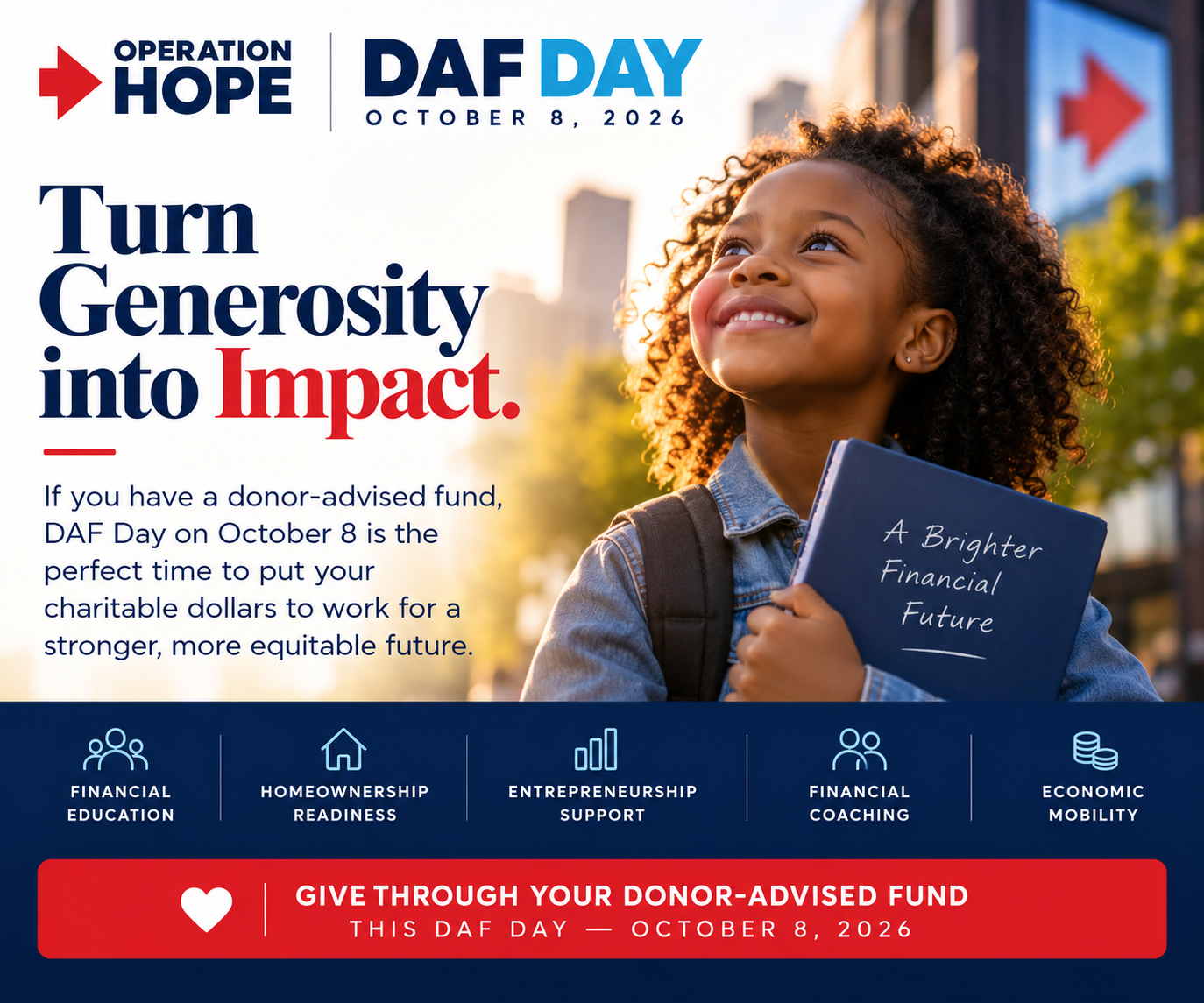
On October 8, 2026, donors, nonprofits, and DAF providers across the country will mark DAF Day — a national day built around one idea: put charitable dollars to work for the communities that need them.
What is a donor-advised fund?
A DAF is a charitable giving account housed at a sponsoring nonprofit. Donors contribute assets, the sponsoring organization takes legal control of them, and the donor keeps advisory privileges — recommending which charities receive grants and how the account is invested over time.
Think of it as a charitable investment account for your philanthropy: a way to move from reacting to each ask that comes in, to building a deliberate strategy around the causes and legacy you actually care about.
Why DAFs matter
They bring intention to giving. Setting resources aside for charitable purposes creates room for a harder, better question: What change do I want my philanthropy to create?
They simplify giving. One account, one place to manage contributions, grants recommended to multiple nonprofits without juggling separate transactions for each.
They can be tax-efficient. Contributions to qualifying DAFs may be eligible for a charitable deduction, depending on individual circumstances — donors should talk to their tax or financial advisor about their specific situation.
They can become a family tradition. The most meaningful conversations families have been about what wealth they’ll leave behind — they’re about what values that wealth should carry forward. A DAF gives children and grandchildren a seat at that table early.
Most importantly: DAFs can turn money already committed to charity into impact today. That $326 billion isn’t hypothetical generosity — it’s money that’s already crossed the line into “charitable.” The only question left is when it reaches the organizations doing the work.
DAF Day: October 8
Launched in 2024, DAF Day brings donors, nonprofits, and DAF providers together around one simple idea: don’t just hold a charitable fund — activate it.
At Operation HOPE, we see what that activation looks like every day. Financial education. Coaching. Entrepreneurship support. A single charitable contribution can become a stronger credit profile, a first home, a new business, a family’s financial stability — the start of generational wealth. That’s philanthropy moving from transaction to transformation.
If you already hold a DAF, use October 8 as the prompt to open your account and ask:
- What causes matter most to me and my family right now?
- Are there dollars I could put to work today, not someday?
- Is there an organization I already believe in that deserves a bigger commitment?
- How do I make my giving create opportunities not just today, but for generations?
If Operation HOPE’s mission resonates — that financial dignity and economic opportunity should be within everyone’s reach — I would be honored to have you consider us as part of that conversation.
On October 8, let’s not just celebrate generosity. Let’s activate it.
Money sitting in a charitable account represents potential. Money put to work represents opportunity, dignity, ownership, and change that outlasts any one gift.
This DAF Day, let’s turn intention into impact.
To learn more about DAF Day, visit DAFDay.com. To recommend a grant to Operation HOPE through your donor-advised fund, visit this link.