


The Current Economy is Not Working:
Operation HOPE Clients Lean into Financial Guidance Through Challenging Tradeoffs
Economic stress remains high, with nearly three-quarters having to choose between essential expenses
HERE ARE FIVE KEY FINDINGS:
1. “This economy is not working for me”
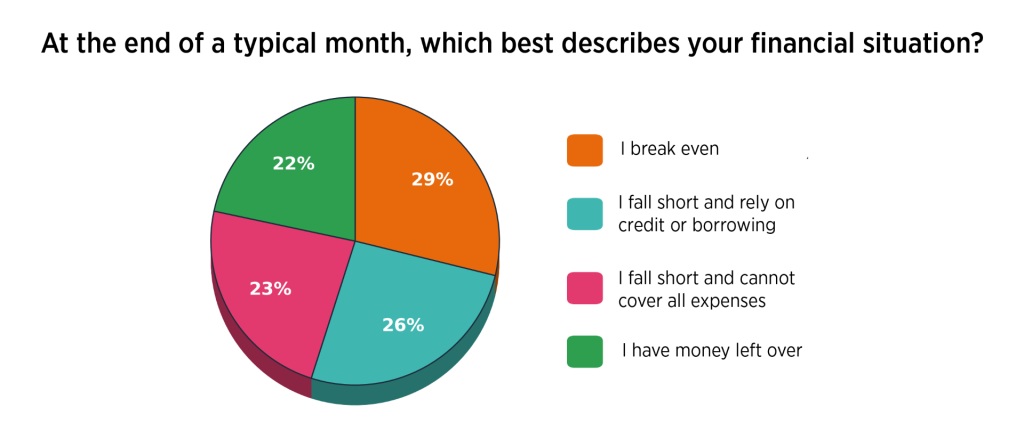
Over three-quarters (77%) say the current economy is not working for people like themselves. 40% say they are worse off financially than they were a year ago, which is a 6-point increase from last quarter. This correlates with an increase in those who say their personal debt levels grew over the past three months, from 45% to 50%. With all of this considered, it is not a surprise that half are falling short each month.
2. A vast majority has had to choose between essentials
Almost three-quarters (72%) have had to choose between paying for one essential expense over another (e.g., gas vs. food) in the past three months, with nearly 40% saying they had to do this frequently. With already 76% saying they are living paycheck to paycheck, increased costs of essential items—no matter how small—are felt in a big way.
The cost of everyday goods (groceries, clothing, gas, etc.) jumped seven points from last quarter to 46% as the factor that most impacted their lives in the past three months. Rising debt levels, housing costs, and job dissatisfaction trailed at 22%, 18%, and 11%, respectively.
3. Job satisfaction declined
The sentiment that wages are not keeping up with the cost of living is likely a large contributor to the decrease in job satisfaction, from 50% last quarter down to 44%. However, clients remain largely hopeful that their work/career will improve over the next year, at 82%.
4. Clients look toward additional sources of income
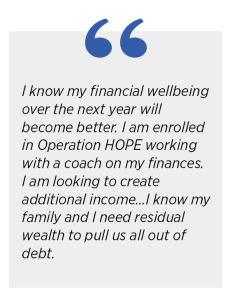
When money is tight, our clients often speak with their Financial Wellbeing Coaches about creating additional sources of income. This quarter showed a 7-point increase in those who considered starting a small business in the past three months but decided not, for various reasons including a lack of capital, a poor economy, or lack of customers (27%). This is the highest percentage since the inception of our survey over two years ago, speaking to both the need of additional income as well as the lack of factors to even consider taking that leap. However, we did see the highest number of those who have started a small business this quarter, at 17%. Additionally, 44% dipped into their retirement accounts in the past three months, either as a loan or as an early/emergency withdrawal.
5. Security is low, but optimism is undeterred
Only one-third (36%) say they feel secure about their financial future. However, those who feel hopeful that their financial wellbeing will increase over the next year stayed consistent with the previous quarter, at 82%.
in the news


