


When Jenny received a grant to launch a for-profit venture connected to her nonprofit work, she did what many founders do—she moved fast.
“I got a grant to do it and I just took off running,” she said.
What she didn’t have, however, was something equally essential: a real business plan.
A SCORE mentor pointed her toward Operation HOPE, where a free five-week virtual business planning webinar was being facilitated by Small Business Coach, Brooke Ratliff. Jenny enrolled immediately, unsure of exactly what to expect.
What she found was transformational.
“The information that Brooke disseminated over the course was invaluable to me,” she said. “It really gave me a good read on what I needed to do to develop a solid business plan.”
At first, Jenny had viewed a business plan as something to show investors—a formal document meant to check a box. But during Brooke’s course, her understanding deepened.
“Understanding the numbers was key for me,” she explained. “Brooke bringing out that it was a vehicle for securing capital from banks—it really was a light bulb moment for me.”
The business plan wasn’t just paperwork. It was leverage.
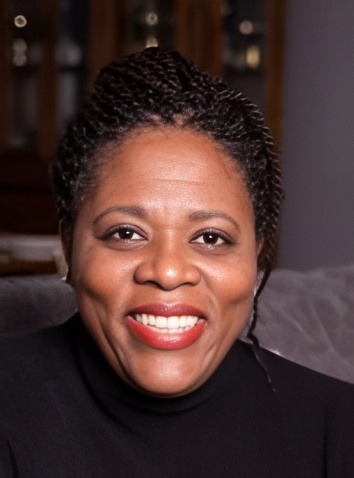
For Jenny, who identifies as a BIPOC founder, that realization carried even greater weight.
“Being a BIPOC founder… it is difficult for us to secure capital for our business ventures. And so having a really solid, well-rounded out, well-thought-out business plan… I thought was great to learn how to do.”
Instead of walking into funding conversations with passion alone, she would be equipped with preparation, strategy, and proof.
As she worked through the curriculum and refined her thinking, her vision for the venture became clearer and more ambitious. Today, her venture has evolved into a digital upskilling educational platform designed to serve adult and student learners in Detroit—and eventually far beyond—helping them move from low-wage work toward economic mobility and security. That evolution was guided by the discipline of building the business plan from the ground up.
Working with Brooke made the process approachable rather than intimidating.
Jenny explained, “She was absolutely our coach, but she was very relatable. She seemed like she came from a founder’s background. So she understood what our positions were.”
Brooke didn’t simply deliver information and move on. She extended sessions when participants had questions and created space for dialogue.
“She would extend the time so we can ask… things that we weren’t clear about,” Jenny said. “It was absolutely a wonderful experience.”
Now, armed with a refined business plan and deeper understanding of her numbers, Jenny and her team are preparing to build a working prototype—grounded in real-world feedback from customer discovery sessions—before seeking additional capital. Investors, she learned, want more than enthusiasm.
“We have our passion,” she said. “But we now have our proof as well which is great.”
That distinction—passion plus proof—has changed how she approaches fundraising.
“Now we’re at the gate where we have to start asking people to give us money,” she said. “It’s daunting… but we are armed with the tools that we need to show them, hey, this is what we’ve done.”
For founders who ask how she built the foundation for her venture, her answer is immediate.
“Operation HOPE is the first thing out of my mouth,” she said. “Find them. See if you can tap into one of the sessions and really invest in the time… so that you can get the most out of it.”
For Jenny, Operation HOPE didn’t just help her write a business plan. It helped her transform passion into proof—and proof into possibilities.
For more information: OperationHOPE.org. Follow the HOPE conversation on Facebook, Instagram or LinkedIn.