


Women’s History Month at Operation HOPE — a story told at every level

Operation HOPE was founded on a simple but radical belief: that financial dignity is not a privilege reserved for the few, but a right that belongs to everyone. For more than three decades, that belief has driven our work, connecting underserved individuals and communities to the financial education, coaching, and partnerships they need to build real, lasting stability. We call it the Silver Rights movement: the idea that the unfinished work of civil rights in America is economic, and that access to capital, credit, and financial knowledge is the frontier of that work.
That work doesn’t happen abstractly. It happens in specific rooms, between specific people, through relationships built one conversation at a time. It happens because of the bank partners who choose to treat financial inclusion as a core value. Because of the coaches who show up for the hard conversations. Because of the clients who refuse to give up on a vision even when the rejections pile up.
This Women’s History Month, we want to show you what that looks like in practice, through the stories of three women who represent that ecosystem from the inside. Not as a list of accomplishments, but as what it actually is: one continuous thread, running from the institution to the coach to the client and back again. Pull on any part of it, and you feel the whole.
__________________________
She Builds the Framework
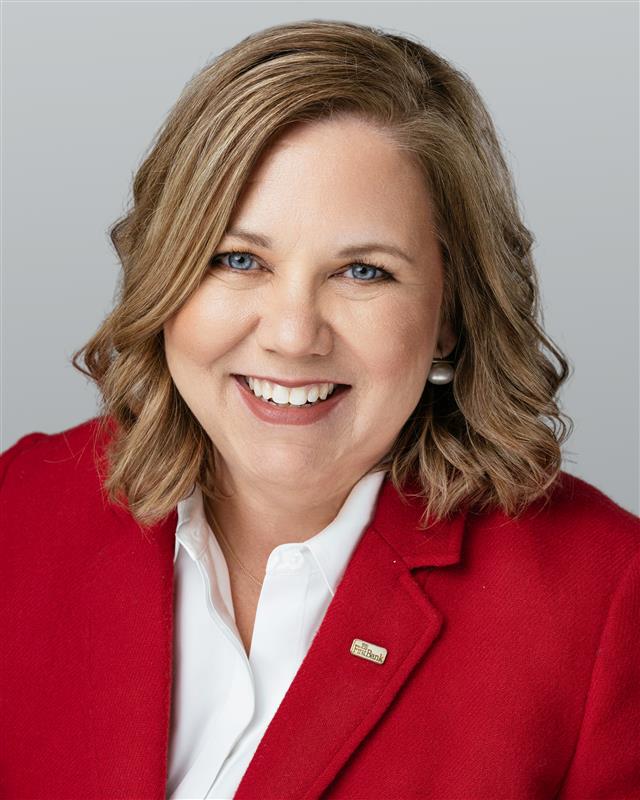
Aimee Hamilton has spent more than 30 years thinking about risk — what it is, how to measure it, and what it costs when it isn’t managed well. As Chief Risk Officer at FirstBank, she oversees the systems that protect the institution: compliance, information security, fraud management, loan review. It is serious, technical, demanding work, and she is very good at it.
But inside her portfolio sits something that doesn’t always live in a risk function: community development. The work of making sure FirstBank’s relationship to the communities it serves is one of genuine access, not just proximity. That’s not incidental to Aimee’s role. It’s central to how she understands it.
This is the thing about risk management that rarely gets talked about: the question it’s always quietly answering is who gets protected, and who gets let in. Thirty years of experience with organizations ranging from $800 million to $50 billion in assets gives you a particular clarity about that question. You see what happens when the answer is too narrow. You see what it costs — to the community, and eventually to the institution itself.
FirstBank’s partnership with Operation HOPE lives inside that answer. It is one expression of a belief that HOPE has always held — that financial dignity and institutional health are not competing priorities, that the bank which helps build a financially literate, stable community is the bank that earns and keeps that community’s trust. For HOPE, partnerships like this one are not a footnote to the mission. They are how the mission reaches people at scale. Aimee Hamilton understands this not as a policy position but as a professional conviction, built across decades of work.
She builds the framework. And the framework, when it’s built right, is what makes everything else possible.
“We wear many hats — doctors, accountants, lawyers, teachers, mental health counselors, maids, chauffeurs, and chiefs. We do it all because we know it must get done.”
— Bridget Wells, Financial Wellbeing Coach, Operation HOPE
__________________________
She Builds Dignity
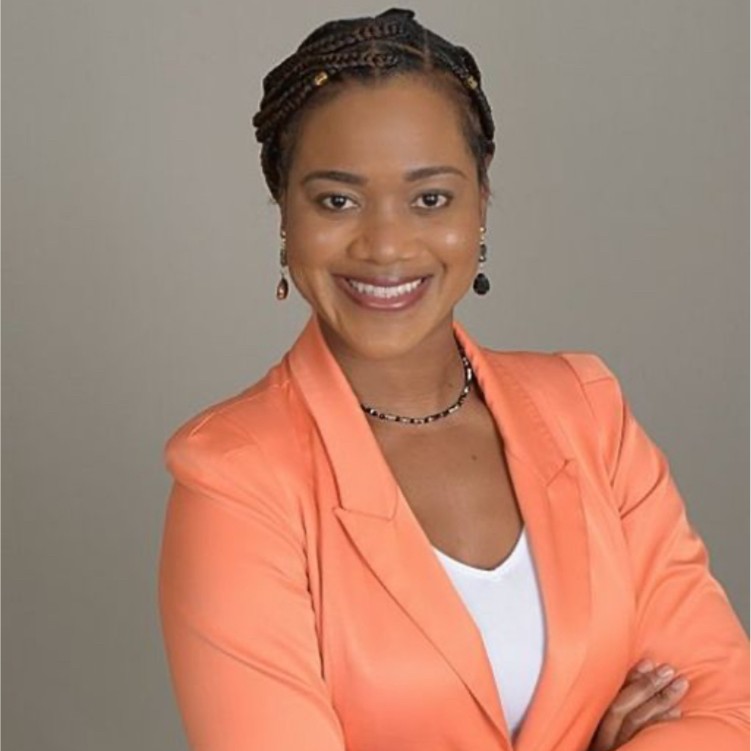
Shakiera Carter doesn’t always know what someone is going to say when they sit down across from her. Sometimes they come in talking about credit scores or debt-to-income ratios. Sometimes they come in with something heavier, harder to name — a sense that the financial decisions they’ve made, or the ones that were made for them, say something permanent about who they are and what they deserve.
Her job, as she understands it, is to be in the room for both conversations.
“Many times, those conversations come with tears, vulnerability, and hope for a better future,” Shakiera says. “Being able to guide clients through those moments and help them build confidence in their financial decisions shows me that the work we do is truly changing lives.”
What Shakiera is describing is not financial coaching in the narrow sense. It’s something closer to restoration — giving someone back their sense of agency, their belief that the future is something they can participate in shaping. It requires a kind of presence that can’t be scripted or systematized. It requires someone who is willing to sit in the hard room and stay there.
“Every client we serve,” she says, “represents an opportunity to restore dignity, build knowledge, and create a pathway to financial stability.”
That word — dignity — is doing important work. It reminds us that financial empowerment is not fundamentally about numbers. It’s about what people believe is possible for them. Change that, and you change everything downstream: the decisions they make, the risks they’re willing to take, the futures they’re willing to imagine. Shakiera Carter changes that, one conversation at a time.
“When you empower a woman and her children with financial knowledge, you create the opportunity to change the trajectory of an entire generation.” — Lorene Rochez, Financial Wellbeing Coach, Operation HOPE
__________________________
She Builds Homes
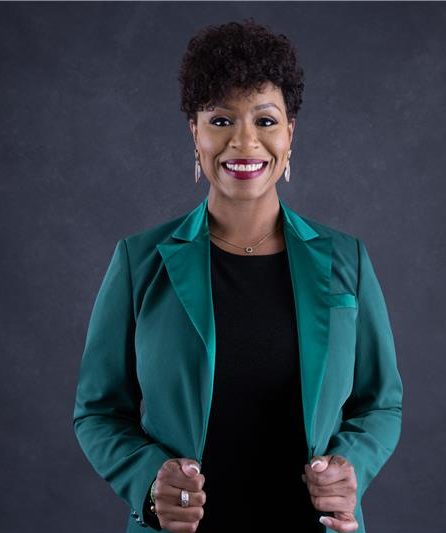
In 2020, Jamie Rae Wright founded a company. She had no outside funding, no institutional backing, and no roadmap. What she had was a decade of personal experience — as a domestic violence survivor, as someone who had experienced homelessness, as a woman who had watched HGTV feature her own story of buying a house in Houston and thought: what about the women who can’t do this alone?
Her mission was clear from the beginning: to build safe, affordable housing for domestic violence survivors and their children. The vision was real. What she needed was the strategy to match it.
That’s where Operation HOPE came in, and specifically, where Coach Pamela Sanford came in.
“Coach Pamela challenged me, encouraged me, provided resources, and would not allow me to play small,” Jamie says. They met at least once a week for months. Coach Pamela asked the questions that forced precision: What goal are you trying to achieve? How would you sustain this? Did you think about this? She pushed Jamie toward grant funding when Jamie wasn’t sure it was possible. She refused to let the vision shrink to fit the fear.
The results speak in the plainest possible terms: a $4.1 million grant from the State of Oklahoma to build 13 homes for domestic violence survivors. An additional $250,000 grant to provide financial literacy, homebuying coaching, and supportive services for the families who will live in those homes. A model that doesn’t just solve for shelter, but also for stability, for the next decision, and the one after that.
“I absolutely could not have achieved the $4.1 million grant and an additional $250,000 grant without Coach Pamela and Operation HOPE,” Jamie says. “Despite facing numerous rejections, I persevered. My HOPE experience is directly responsible for the funding we were awarded.”
Thirteen homes. Thirteen families. The children who will grow up in them, with a different story than the one their mothers were trying to escape. That’s what it looks like when the framework holds, when the coaching is real, when someone refuses to let another person play small.
She builds homes. But what she’s really building is the proof that this works.
__________________________
The Thread
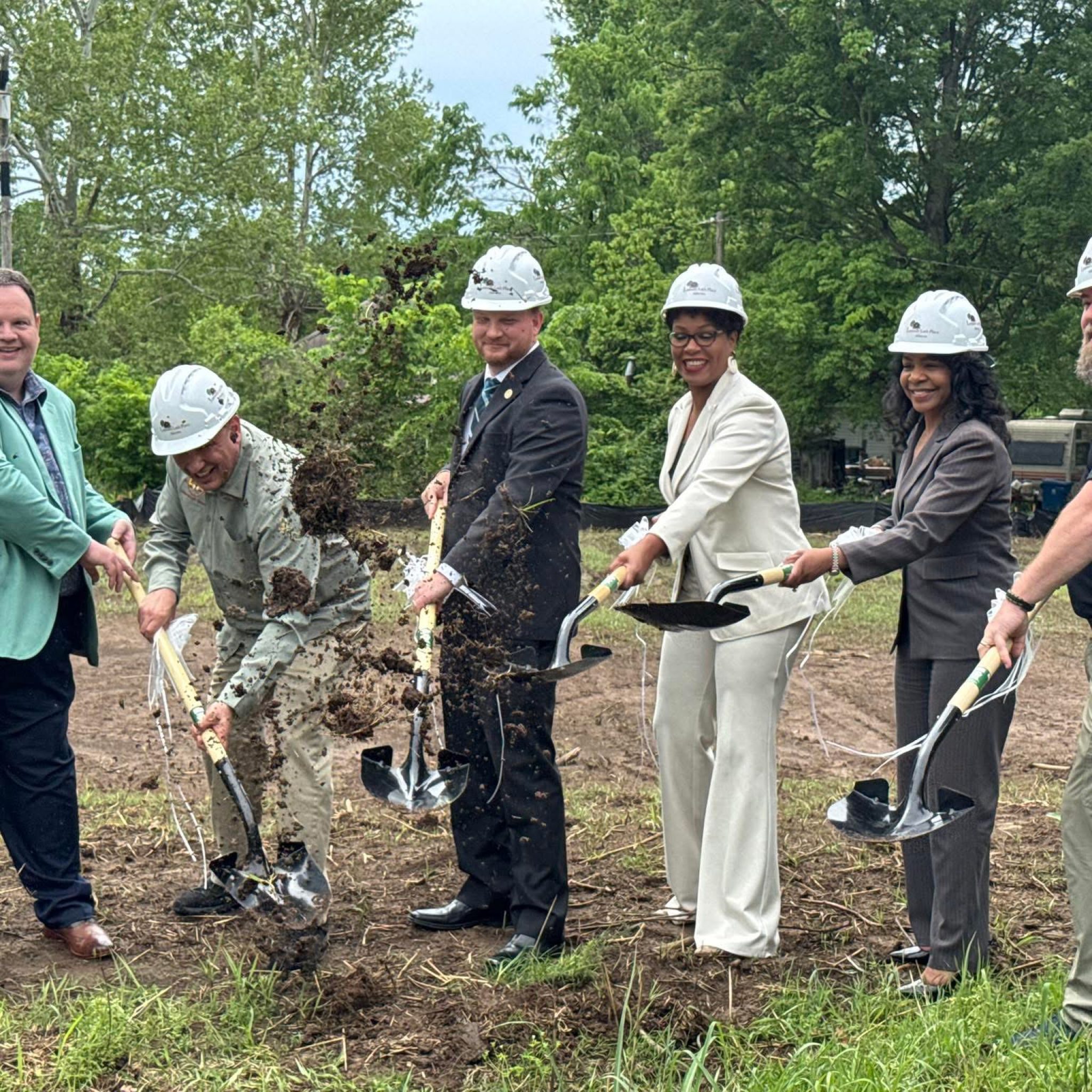
Aimee Hamilton. Shakiera Carter. Jamie Rae Wright. Three women, three different roles, three different cities and one continuous story about what Operation HOPE’s mission looks like when it’s working.
It looks like institutions willing to treat access as a core value, not a footnote. It looks like coaches willing to sit in the hard room and stay. It looks like clients who persist through the rejections and keep going anyway, because someone refused to let them play small. This is the Silver Rights movement in action.
At its heart, the movement is but a set of relationships, sustained over time, that move real people from financial exclusion to financial dignity. Operation HOPE’s job is to hold all of it together — the framework, the coaching relationship, the proof point, and the next person who walks in the door.
Women’s History Month may end on March 31, but the work doesn’t. And in many ways, it’s just begun.
That’s why we’ll be celebrating April as Financial Literacy Month, and we’re bringing back Green Socks Day! It’s all the same thread, similar conversations, and the next chapter. Because financial dignity is not a destination you arrive at once. It’s something that gets built, and maintained, and passed on. By women like these. And the many more who show up every day to do the work that doesn’t always announce itself.
Learn more about Operation HOPE’s programs →
Join us for Green Socks Day →